Nursing Assistant Training and Healthcare Attendant Courses in Bhubaneswar, Odisha
Updated: Nov 5
Building Skills, Empowering Women, and Creating Opportunities in Healthcare
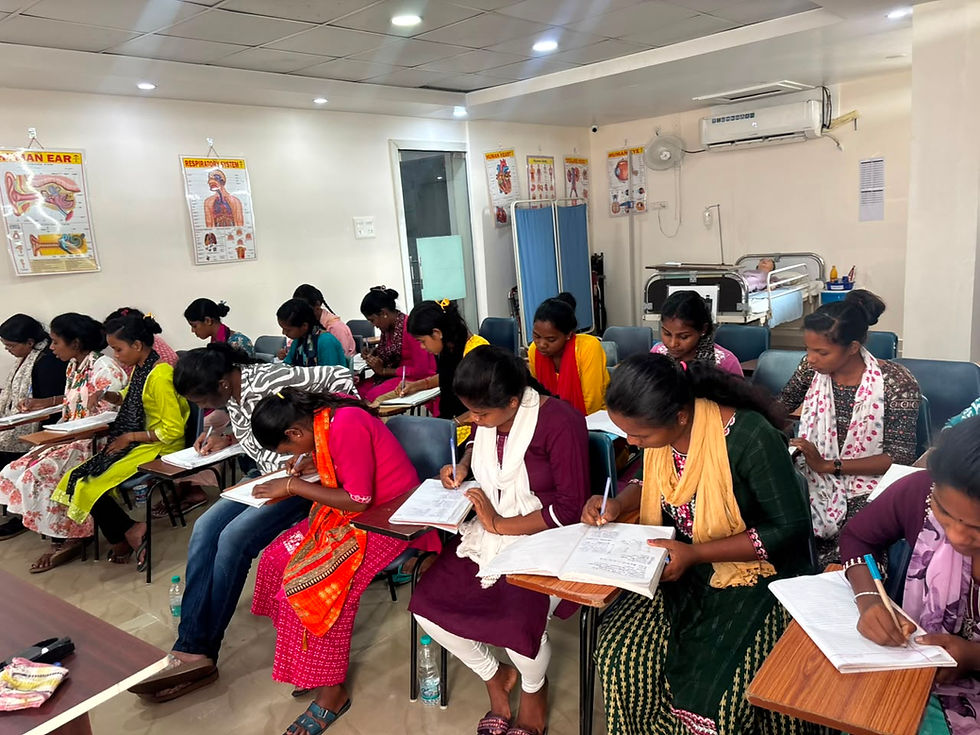
India's healthcare sector is growing rapidly, creating an increasing need for skilled, compassionate, and well-trained healthcare professionals. From hospitals and nursing homes to rehabilitation centres and home healthcare services, trained healthcare attendants play an important role in supporting patients and improving their quality of life.
Families caring for elderly relatives, individuals recovering from surgery, and patients living with chronic illnesses often require reliable assistance with daily activities and personal care. Providing this support requires more than good intentions.
Healthcare attendants need practical training, an understanding of patient safety, effective communication skills, and the ability to provide care with dignity and compassion.
India’s healthcare sector continues to evolve, creating a need for trained professionals who understand patient care, safety, communication, and responsibility.
Hospitals, nursing homes, rehabilitation centres, and home healthcare services all depend on people who can provide reliable assistance with dignity and compassion.
For individuals looking to build a meaningful career, nursing assistant training and healthcare attendant courses can offer a practical starting point.
In Bhubaneswar and across Odisha, vocational training can also create opportunities for rural youth, women, and people from underserved communities to develop skills and explore employment pathways.
Why Is Healthcare Attendant Training Important?
Caring for someone who is unwell involves much more than helping with daily activities.
Patients may need support with personal hygiene, mobility, nutrition, recovery routines, and emotional well-being. Families caring for elderly relatives or people living with chronic illnesses may also need guidance and reliable assistance.
Healthcare attendants help meet these needs by supporting patients and working alongside other healthcare professionals within their assigned responsibilities.
Proper training helps learners understand how to:
Assist patients with everyday activities while respecting their dignity and privacy.
Follow hygiene and infection prevention practices.
Support safe movement and help reduce the risk of falls.
Communicate respectfully with patients, families, and healthcare teams.
Recognise situations that require prompt attention from qualified medical professionals.
Maintain professional conduct and follow patient safety procedures.
These skills help prepare learners for the responsibilities of caregiving and give them a clearer understanding of what working in a healthcare environment involves.
Nursing Assistant Training and Healthcare Attendant Courses in Bhubaneswar: Learning Through Practical Experience
Healthcare education is most effective when learners have opportunities to apply what they learn.
Practical training helps candidates become familiar with caregiving responsibilities, workplace expectations, and the importance of following established procedures.
A healthcare attendant training programme may cover several areas.
1. Basic Patient Care
Learners develop an understanding of personal hygiene, mobility assistance, patient comfort, communication, and respectful caregiving.
They may also learn about monitoring basic vital signs under appropriate supervision and following infection control procedures.
2. Practical Healthcare Skills
Depending on the course curriculum and the learner’s authorised role, training may introduce wound care assistance, specimen handling, equipment use, post-operative support, and other essential procedures.
Clinical tasks must be performed only within the learner’s competence, authorised scope, and required supervision.
3. Supporting Patients with Long-Term Conditions
People living with diabetes, hypertension, heart disease, cancer, respiratory conditions, or the effects of a stroke may require ongoing support.
Training can help attendants understand patients’ daily care needs and recognise when concerns should be reported to qualified healthcare professionals.
4. Patient Safety and Dignity
Patient safety is at the heart of good caregiving.
Learners should understand privacy, consent, respectful communication, safe mobility, infection prevention, accurate reporting, and ethical conduct.
5. Home Healthcare
Caregiving at home requires patience, flexibility, and effective communication with family members.
Training may cover personal care, nutrition support, safe routines, and responding appropriately when a patient’s condition changes.
6. Communication and Workplace Readiness
Technical knowledge is only one part of a successful healthcare career.
Empathy, teamwork, time management, problem-solving, and the ability to remain calm under pressure are equally important.
Developing these skills can help learners prepare for real workplace situations and build professional confidence.
OrangeCross Skill Academy: Connecting Training with Opportunity
For many young people, the challenge is not a lack of ambition. It is finding accessible training, understanding career options, and getting the guidance needed to take the first step.
OrangeCross Skill Academy (Free nursing training), focuses on developing practical healthcare skills and preparing learners for caregiving roles like nursing assistant training and healthcare attendant courses in Bhubaneswar.
Its approach emphasises patient dignity, workplace readiness, compassionate care, and continued learning.
Healthcare training can be especially valuable for people who want to enter the workforce but have limited access to professional education or career guidance.
With appropriate training and support, learners can begin exploring opportunities in hospitals, nursing homes, rehabilitation facilities, and home healthcare services.
For aspiring healthcare attendants in Bhubaneswar and elsewhere in Odisha, choosing a course that combines practical learning with clear information about certification, eligibility, and employment pathways is an important first step.
Empowering Women Through Healthcare Training
Skill development can open doors for women who want to build careers, contribute to their household income, and become more financially independent.
In rural, tribal, and underserved communities, women may face additional barriers to education and employment, including limited access to training centres, financial constraints, family responsibilities, and a lack of career information.
Reaching women within their communities and helping them understand available opportunities can be an important part of addressing these challenges.
OrangeCross skill academy aims to encourage eligible women to pursue job-oriented healthcare training course as a pathway to building a career in the healthcare sector.
Through awareness, guidance, and access to relevant training opportunities, women can learn about caregiving roles and make informed decisions about their professional futures.
The benefits can extend beyond an individual learner.
When women gain skills and access employment, they may be better positioned to support their families, contribute to household decisions, and become role models for others in their communities.
Empowerment is not simply about offering a training course. It is also about helping women recognise their potential, access guidance, and feel confident about pursuing their goals.
OrangeCross and DDU-GKY: Creating Pathways to Skills and Employment
A Collaborative Initiative for Women’s Skill Development and Rural Empowerment
The Deen Dayal Upadhyaya Grameen Kaushalya Yojana (DDU-GKY) is a Government of India initiative focused on placement-linked skill training for eligible rural youth from poor households.
The programme aims to connect vocational learning with employment opportunities, helping eligible candidates develop industry-relevant skills and prepare for work.
OrangeCross has described its DDU-GKY initiative in Odisha as focusing on training aspiring healthcare professionals as Front Line Health Caregiving Assistants, in collaboration with ORMAS.
The initiative aims to connect eligible rural youth with practical training and potential employment pathways in healthcare.
For rural communities, access to relevant training can make a meaningful difference. It can help young people explore careers beyond their immediate surroundings while developing skills that are useful to employers and the communities they serve.
Reaching Rural, Tribal, and Underserved Communities Through OrangeCross
OrangeCross recognises that access to education, skill development, and employment opportunities can be limited for people living in rural, tribal, and underserved communities.
Through its healthcare skill development initiatives, including its DDU-GKY initiative in Odisha, OrangeCross aims to connect eligible rural youth with practical training and potential career pathways in healthcare.
A key part of making training accessible is reducing financial barriers. ligible candidates can access free training and food support under the applicable programme provisions, helping them focus on learning and developing the skills needed to pursue a career in healthcare.
Through community outreach, OrangeCross encourages young people, particularly skill development courses for women, to explore healthcare careers and take steps towards greater confidence and financial independence.
Guidance on admission requirements, practical learning, and career opportunities can help learners make informed decisions about their futures.
OrangeCross also encourages trainees to look beyond their first qualification by exploring advanced courses, specialised healthcare skills, and opportunities for continued professional development.
By bringing nursing training for girls support eligible learners throughout their development, OrangeCross aims to contribute to women's empowerment, stronger families, and more resilient rural communities.
Why Continuing Education Matters
Completing an entry-level course can be the beginning of a career rather than the end of learning.
Healthcare practices, patient needs, and workplace expectations continue to evolve. Further education can help workers strengthen their knowledge, develop new competencies, and explore areas of specialisation.
OrangeCross encourages learners to consider career in healthcare after 10th ,continued education and higher-level courses as part of their professional development.

Who Can Apply for Healthcare Attendant Training to become a Nursing Assistant in Odisha?
OrangeCross Skill Academy (nursing assistant course after 10th), welcomes eligible candidates who aspire to build a career in healthcare, with a special focus on creating opportunities for women, rural youth, and individuals from tribal and underserved communities.
The general eligibility guidelines include:
Age: 18–45 years, subject to programme requirements.
Education: Class 10 pass as the stated minimum, subject to applicable eligibility rules.
Background: Candidates from different communities, with particular encouragement for those from rural, tribal, and underserved areas.
Language: Learning support in Odia, with basic Hindi and English communication.
Free Training and Essential Support
To help reduce financial barriers and make learning more accessible, eligible trainees receive support under the applicable programme provisions, which makes it free healthcare training in Odisha :
Free skill training to develop practical healthcare skills.
Free food and meals during the training period.
Free accommodation and shelter, where provided by the programme.
Free books and study materials to support learning.
Free pens,notebooks, stationery, and other essential learning supplies.
Through this initiative, OrangeCross provides job-oriented courses for girls, quality healthcare training opportunities, offering students a pathway to pursue career-oriented courses after Class 10. Which aims to help eligible candidates focus on learning, building confidence, and preparing for employment without the burden of essential training-related expenses.
The goal is simple: to make healthcare skill development accessible, encourage women and rural youth to pursue their ambitions, and help them take steps towards a more independent and secure future.
Your Future Starts Today!
What are you waiting for? Take the first step towards a brighter future with OrangeCross Skill Academy.
Explore healthcare training opportunities, build practical skills, and move closer to a rewarding career.
If you are an eligible rural youth aspiring to make a difference, your journey starts here!
Learn. Grow. Get Skilled. Build Your Future with OrangeCross!
Get in Touch with OrangeCross!
For more information about our healthcare training programmes and career opportunities, contact us today.
Call us: +91 94380 11116
Email: info@orangecross.in
Website: www.orangecross.in


Comments